
Female Science Fiction & Fantasy Authors to Read Right Now
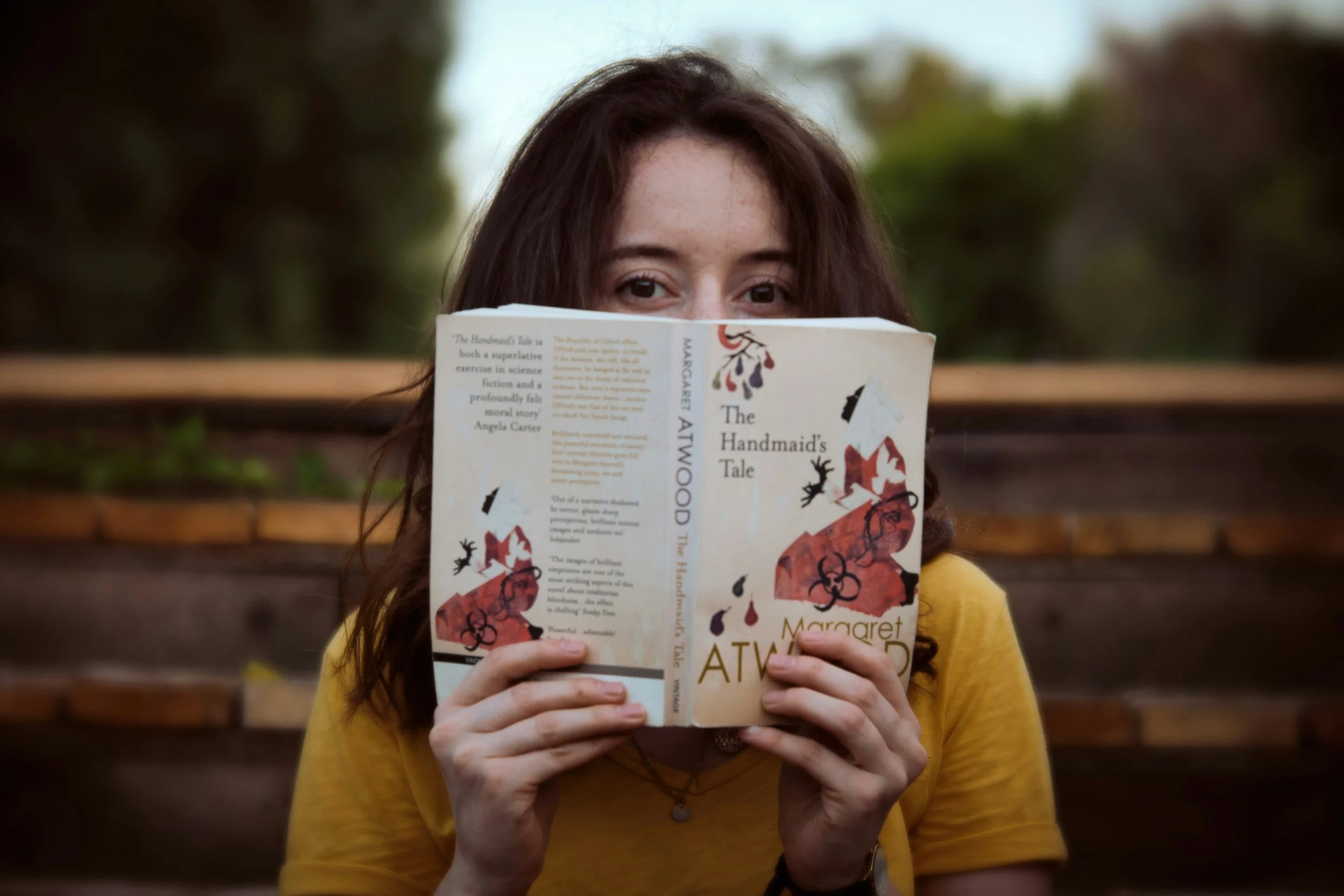
I have always been drawn to worlds that exist just a little beyond our own.
Sometimes that means wandering through an entirely different realm, where magic has its own rules and monsters lurk beyond the edge of the map. Other times, it means looking at our own world from a slightly different angle: What if this happened? What if society worked this way? What if humanity had to reckon with the consequences of something we’re doing right now?
That is part of what I love about science fiction and fantasy. These genres give writers room to ask enormous questions about humanity while telling stories that are, at their core, deeply personal.
And some of the most interesting writers to do that have been women.
From Mary Shelley, whose Frankenstein helped lay the groundwork for modern science fiction, to contemporary authors who are still reshaping what fantasy and speculative fiction can look like, these are some of the female science fiction and fantasy authors I think are worth reading right now.
Female Science Fiction & Fantasy Authors You Must Read
1. Mary Shelley
It feels almost obligatory to begin with Mary Shelley, but that doesn't make her any less deserving of the spot.
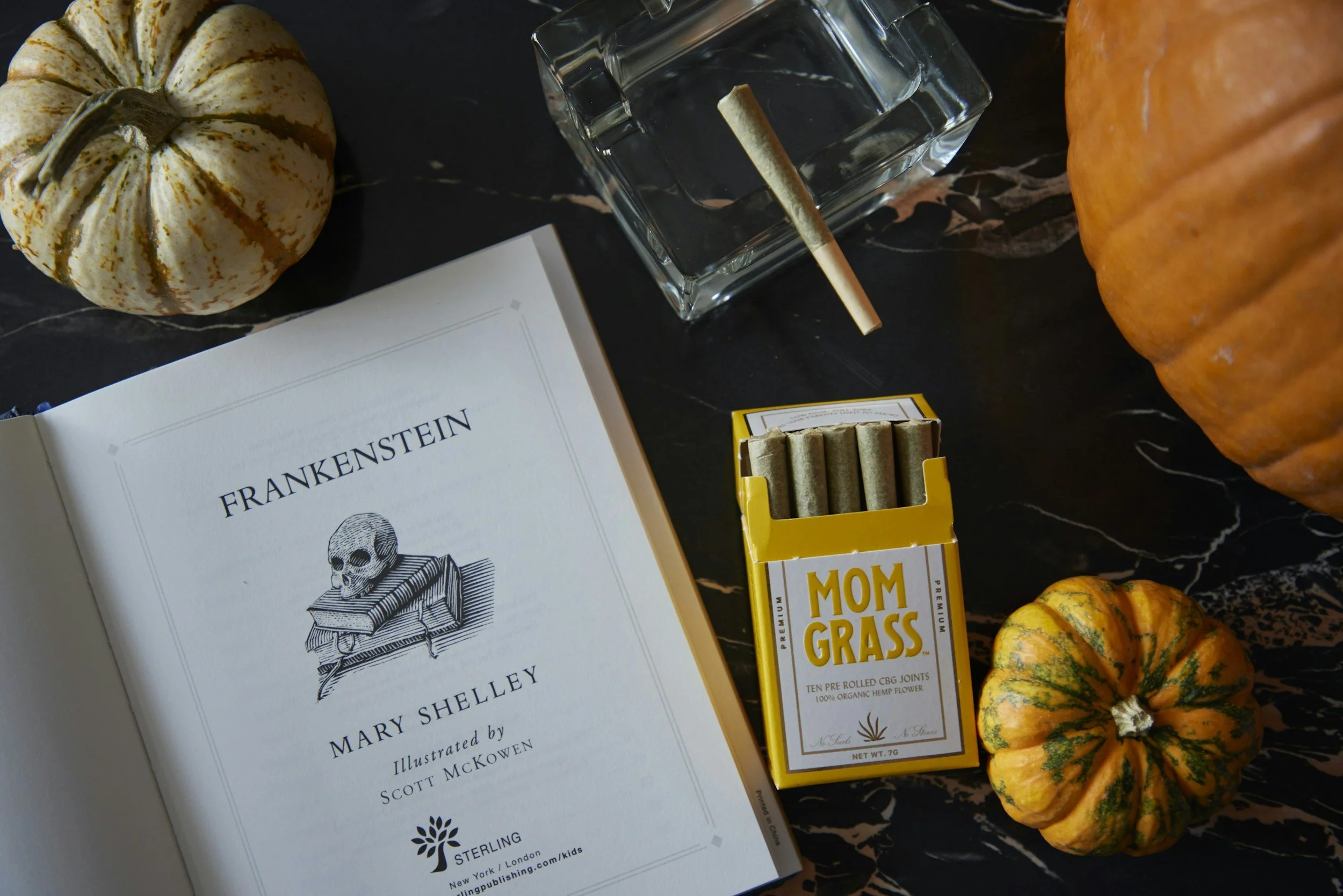
When Mary Wollstonecraft Shelley set out to write Frankenstein, she wasn't trying to pioneer an entire genre. The story emerged from a famous writing challenge among Shelley, Percy Bysshe Shelley, Lord Byron, and John Polidori during a summer in Switzerland. What Shelley produced became one of the most enduring works of speculative fiction ever written.
And Frankenstein is much stranger and more thoughtful than its many adaptations would have you believe.
The novel isn't really about a lumbering monster chasing people through a castle. It's about creation, responsibility, isolation, ambition, and what happens when someone creates something without considering what they owe to it afterward.
If you've only encountered Frankenstein through movies or Halloween decorations, the original novel is absolutely worth revisiting.
Notable works:
Frankenstein
The Last Man
Valperga
2. Shirley Jackson
Shirley Jackson is one of those writers whose work seems to get under your skin without necessarily announcing itself as horror.
Her stories are unsettling because the frightening thing isn't always a monster, a ghost, or some supernatural force. Sometimes it's a house. Sometimes it's a group of neighbors. Sometimes it's the people you thought you could trust.
Jackson's work has had an enormous influence on modern horror and speculative fiction, and The Haunting of Hill House has been adapted multiple times, including into Netflix's acclaimed series. But the original novel is worth reading on its own terms. Jackson's writing is psychological, strange, and often darkly funny, with an uncanny ability to make ordinary situations feel just slightly wrong.
If you like horror that gets into your head rather than simply throwing something scary at you, Jackson is a fantastic place to start.
Notable works:
The Lottery
The Haunting of Hill House
We Have Always Lived in the Castle
3. Ursula K. Le Guin
Ursula K. Le Guin challenged science fiction and fantasy's conventions throughout her career, writing about gender, race, identity, politics, society, and what it actually means to be human. Her work earned her numerous Hugo, Nebula, and Locus Awards, among many other honors.
While there are so many fantastic novels in her bibliography, I'm going to recommend A Wizard of Earthsea because it's a marvelous introduction to the fantasy world of Earthsea.
We meet Ged when he's a boy in a remote village. He isn't yet a mighty wizard—or even much of a wizard at all. We follow him through his apprenticeship with a wise, reticent wizard and eventually to a renowned school of magic. From there, things get considerably more complicated.
What I most connected with in A Wizard of Earthsea was Ged's growth. He starts out downright insufferable and becomes, through some difficult trials, a wise and considerate friend and wizard. I also loved the book's almost Arthurian quality. At times, it felt like I was traveling alongside Sir Gawain on some strange journey to confront the Green Knight.
A Wizard of Earthsea is beautiful, devastating, and surprisingly poignant. I highly recommend it to anyone who's tired of the standard good-versus-evil, kings-versus-monsters fantasy story.
And I can't finish this section without mentioning Le Guin's short story "The Fliers of Gy." Featured in The Unreal and the Real, it's about another world where some people have feathers—and some have wings. It's strange and beautiful and gives me chills every time I think about it.
Notable works:
The Left Hand of Darkness
A Wizard of Earthsea
The Ones Who Walk Away from Omelas
4. Octavia E. Butler
Octavia E. Butler's work feels remarkably prescient even decades after she wrote it.
Her protagonists are often survivors: people who already understand struggle, discrimination, or displacement before the story's central conflict even begins. Butler wasn't particularly interested in creating perfect heroes. Her characters are complicated people forced to make difficult choices in worlds that are often hostile to them.
Her work explores racism, gender, climate change, economic inequality, power, and the ways people respond when the systems around them begin to collapse.
Butler once described her writing this way: "I write about people who do extraordinary things. It just turned out it was called science fiction."
That's a pretty good description.
Her books can be difficult to read. They're supposed to be. Butler doesn't offer easy answers, and she doesn't always give her characters the comfort of a happy ending. What she does offer is an extraordinary examination of what people are capable of doing—and surviving.
Notable works:
Kindred
Patternmaster

5. Margaret Atwood
Margaret Atwood is a powerful writer who stares directly into the ugly face of human nature and doesn't blink.
She depicts brutal realities for her characters, but the most unsettling thing about her work is how close those realities can feel to our own. The Handmaid's Tale is the obvious example, but Atwood's bibliography goes well beyond that single novel.
My personal Atwood recommendation is Oryx and Crake. Atwood herself describes the novel as more of a work of speculative fiction rather than pure science fiction because it doesn’t necessarily describe things we can’t “do” yet–a chilling thought, yet I must admit I often find myself reminded of this book when listening to the news.
The discomfort I sometimes feel while reading Atwood is intentional. She doesn't merely want to entertain you with pretty words. She wants to make you question the systems, assumptions, and social structures you've accepted as normal.
And more often than not, she succeeds.
Notable works:
The Handmaid's Tale
Oryx and Crake
The Penelopiad
6. N. K. Jemisin
N. K. Jemisin is one of the most exciting contemporary voices in science fiction and fantasy, and her work is particularly good at making enormous speculative ideas feel intensely personal.
Her Broken Earth trilogy is probably the place to start. The Fifth Season drops you into a world where catastrophic geological events are a regular part of life, and people with the ability to manipulate seismic energy are feared and controlled.
But Jemisin isn't simply interested in building an elaborate fantasy world. Her stories are deeply concerned with power, oppression, survival, identity, and the ways societies decide who deserves safety.
The Broken Earth trilogy also made history: Jemisin became the first author to win three consecutive Hugo Awards for Best Novel, one for each book in the trilogy.
Notable works:
The Fifth Season
The City We Became
The Hundred Thousand Kingdoms
7. Tamsyn Muir
If you like your science fiction and fantasy strange, macabre, irreverent, and occasionally difficult to explain to other people, Tamsyn Muir is for you.
Her Locked Tomb series begins with Gideon the Ninth, which somehow combines necromancers, spaceships, ancient houses, sword fighting, murder mysteries, and a protagonist with an extremely good sense of humor.
It is a bizarre premise. It is also incredibly fun.
Muir's writing has a particular kind of chaotic energy that makes Gideon the Ninth feel unlike much else in contemporary fantasy. The book won the Locus Award for Best First Novel in 2020 and launched one of the more distinctive science-fantasy series of recent years.
And if you finish the book feeling like you understood approximately 70% of what happened, congratulations. You're probably ready for the sequel.
Notable works:
Gideon the Ninth
Harrow the Ninth
Nona the Ninth
8. Nnedi Okorafor
Nnedi Okorafor's work has become one of my favorite examples of how expansive science fiction can be when it isn't confined to the same familiar settings.
Her stories frequently draw from African cultures, mythology, history, and contemporary life while incorporating speculative elements that range from magical realism to science fiction.
Who Fears Death is an especially compelling place to start. Set in a post-apocalyptic Sudan, the novel follows Onyesonwu, a young woman navigating a world shaped by violence, oppression, magic, and prophecy.
Okorafor's books don't simply transplant familiar Western science-fiction or fantasy ideas into a different setting. They create worlds with their own histories, traditions, conflicts, and rules.
If you've been reading a lot of fantasy and science fiction that feels strangely familiar, Okorafor is a great author to add to your list.
Notable works:
Who Fears Death
Binti
Akata Witch
9. Becky Chambers
Not every science-fiction story needs to be about saving the galaxy.
Becky Chambers writes the kind of science fiction that makes me want to curl up somewhere comfortable and spend a few hours thinking about what it means to be a person.
Her Wayfarers series follows a diverse group of characters living and working across a sprawling interspecies galaxy. There's plenty of science fiction here, but Chambers is much more interested in relationships, community, identity, work, friendship, and the strange little things that make a life worth living.
A Psalm for the Wild-Built takes that even further. It's a quiet story about a tea monk and a robot who meet in a world that has largely moved beyond the ecological crisis that once threatened humanity.
Notable works:
A Psalm for the Wild-Built
The Long Way to a Small, Angry Planet
To Be Taught, If Fortunate

More Female Science Fiction and Fantasy Authors to Read
Of course, nine authors barely scratches the surface.
There are so many women who have shaped speculative fiction that I could probably turn this into a much longer list without running out of recommendations. These are simply some of the writers whose work has stuck with me, challenged me, surprised me, or made me look at the world a little differently.
And that's ultimately what I want from a good science fiction or fantasy novel.
Give me a strange world. Give me impossible technology or ancient magic. Give me monsters, spaceships, wizards, ghosts, robots, and people who are just trying to figure out what the hell they're supposed to do with their lives.
But most of all, give me a story that makes me think about our own world differently when I close the book.
