
Movies and Shows to Watch If You Loved Twin Peaks
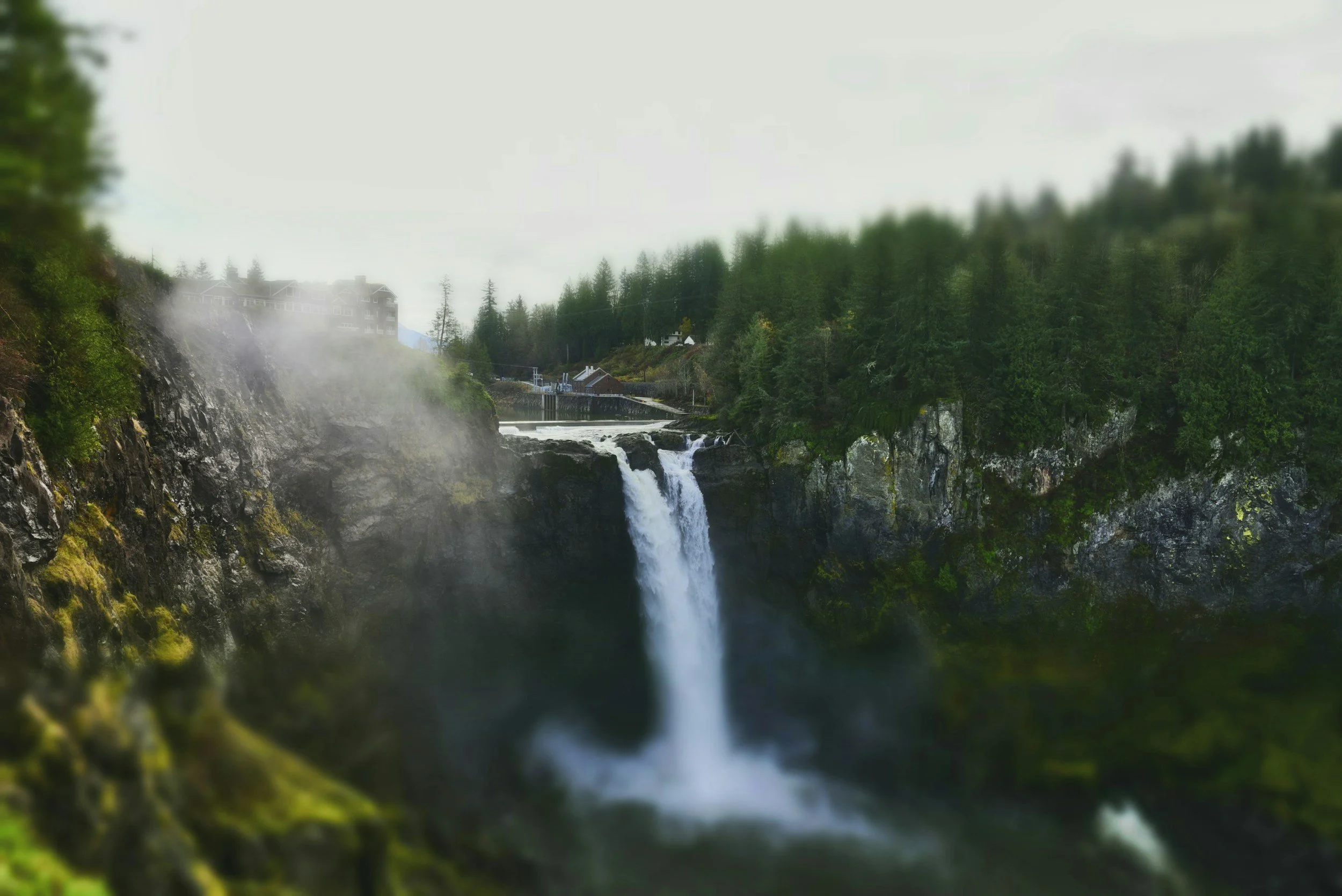
Few shows have left behind a cultural footprint quite like Twin Peaks. More than 35 years after Laura Palmer’s body washed ashore, its influence is still everywhere: idyllic towns hiding terrible secrets, fractured identities, dream logic, surreal humor, cosmic evil, and an almost stubborn belief in the goodness of coffee, pie, and ordinary people.
That also makes recommending shows like Twin Peaks surprisingly difficult. Nothing else is quite like it. Instead, the movies and shows below share pieces of its DNA. Some explore the darkness beneath American life. Some play with identity, trauma, and surrealism. Others capture the strange warmth, humor, and humanity that make Twin Peaks worth saving in the first place.
Before we get into the recommendations, it helps to look at a few of the themes that make Twin Peaks feel like Twin Peaks.
Themes of Twin Peaks
There’s a lot going on in Twin Peaks. It is a murder mystery, soap opera, supernatural horror story, small-town comedy, and surrealist experiment all at once. But a few recurring themes help define what makes the series feel so distinct.
The split self.
Twin Peaks is fascinated by duality: the person we appear to be versus the person hidden underneath. Laura Palmer embodies this most clearly, but the idea appears everywhere through doppelgängers, tulpas, alternate identities, and doubles. Even the name “Twin Peaks” suggests mirroring, while The Return expands that idea of splitting all the way to the atom itself.
The home as a place of horror.
Twin Peaks looks cozy: diners, coffee, pie, wood-paneled houses, and neighbors who know each other by name. But some of the series' darkest moments happen behind closed doors. Homes and families often conceal abuse, addiction, fear, and violence rather than providing protection from them.
Cycles of violence and trauma.
Violence in Twin Peaks rarely exists in isolation. Trauma passes through families and relationships, while characters repeat patterns of abuse, exploitation, addiction, and control. The supernatural sometimes makes those cycles literal, but the underlying horror is painfully human.
Small-town charm.
Importantly, the warmth of Twin Peaks is real, too. The show genuinely loves community, romance, friendship, coffee, pie, gossip, and mundane routines. That sincerity makes the darkness more effective: there is something good here, and therefore something worth losing.
Surrealism and dream logic.
Dreams contain clues. Time behaves strangely. People speak in riddles. Images repeat without obvious explanation. Twin Peaks often asks viewers to feel their way through a scene rather than solve it, using symbolism, repetition, and dream logic as much as conventional storytelling.
Sex, desire, and power.
Sex and sexuality run throughout the series, especially in its portrayal of teenagers trying to navigate adulthood with very little meaningful protection. Desire can represent intimacy and freedom, but it is also frequently tangled with secrecy, exploitation, repression, and violence.
None of these themes belongs exclusively to Twin Peaks. What makes the show unique is the way it combines them: wholesome Americana beside cosmic horror, comedy beside grief, romance beside violence, and ordinary domestic life beside something deeply strange.
Shows and Movies to Watch if You Love Twin Peaks
Twin Peaks: Fire Walk With Me (1992)
Every Twin Peaks fan should watch Fire Walk with Me to complete Laura Palmer’s story. Lynch strips away much of the series’ quirky small-town charm and gives us an unflinching look at abuse, trauma, and the final days of Laura’s life from her perspective.
Sheryl Lee gives a devastating, career-defining performance, while Ray Wise’s reprise of Leland Palmer is every bit as chilling as it was in the series. Moira Kelly replacing Lara Flynn Boyle as Donna can be jarring at first, but she quickly makes the role her own and holds her own alongside Lee.
It is darker, harsher, and more emotionally direct than the original series—and essential to understanding the tragedy at the heart of Twin Peaks.
Blue Velvet (1986)
Blue Velvet feels like Dale and Diane in another universe—either the version where things went differently, or perhaps where some of Lynch’s later ideas first began to take shape. Kyle MacLachlan and Laura Dern bring an unmistakable familiarity to the film for anyone coming to it after Twin Peaks.
Dennis Hopper and Isabella Rossellini give two of the film’s most unforgettable performances. Frank Booth is pure nightmare fuel, while Dorothy Vallens sits at the center of the film’s mix of desire, vulnerability, violence, and control.
Even the title feels like a perfect Lynchian symbol. Blue velvet is soft, beautiful, and luxurious, but beneath that surface is something much darker. That tension—between beauty and corruption, innocence and depravity, the ordinary and the grotesque—is exactly the territory Twin Peaks would later explore so deeply.
Sharp Objects (2018)
Sharp Objects follows Camille Preaker, an emotionally troubled reporter who returns to her hometown to investigate the murders of two young girls—a setup that immediately echoes the beginning of Twin Peaks.
From there, the similarities only deepen. Wind Gap is an idyllic small town with something rotten underneath, shaped by family trauma, childhood abuse, violence, repression, and generations of secrets. The series is also intensely psychological and often surreal, blurring memory and the present as Camille is forced to confront the place—and the family—that shaped her.
Amy Adams gives a raw, restrained performance, and the entire series is elevated by an incredible soundtrack. The needle drops are some of the best I’ve heard in television, often doing as much emotional work as the dialogue itself.
If you love Twin Peaks for its small-town darkness, damaged families, murdered girls, buried secrets, and dreamlike sense of unease, Sharp Objects is an easy recommendation.
Fargo (1996)
Fargo is slow, strange, bleak, funny, and deeply uncomfortable in a way that should feel familiar to Twin Peaks fans. So much is left unsaid, with long stretches of silence and awkwardness giving the audience room to sit with the absurdity and horror of what is happening.
The performances are incredible across the board. William H. Macy becomes increasingly desperate and unhinged as Jerry Lundegaard, while Steve Buscemi and Peter Stormare are somehow terrifying, murderous, and profoundly stupid at the same time. Frances McDormand, though, is the film’s center of gravity.
Her Marge Gunderson has something of Cooper’s “spirit-warrior” quality: an almost comical resilience and fundamental decency in the face of ugliness. Neither character is naive about how twisted people can be, but both continue meeting that darkness with curiosity, compassion, and an oddly unshakable faith in ordinary life.
Perfect Blue (1997)
Satoshi Kon’s Perfect Blue follows a young woman chasing fame while the people around her increasingly try to define, control, and consume her identity. There is something very Twin Peaks about that setup: a beautiful young woman turned into an object of fascination, with danger gathering around her as the gap between who she is and who others want her to be begins to widen.
Like Laura Palmer and Audrey Horne, Mima is navigating a world where sexuality, performance, and power are constantly tangled together. The film becomes increasingly surreal as reality, memory, fantasy, and performance bleed into one another, leaving both Mima and the viewer unsure of what can be trusted.
If the fractured identities, dream logic, voyeurism, and psychological unease of Twin Peaks are what stick with you most, Perfect Blue is an essential watch.
Too Old to Die Young (2019)
Nicolas Winding Refn’s Too Old to Die Young explores a lot of the same territory Lynch returns to again and again: the corruption beneath American mythmaking, the commodification of women and children, and the destruction of innocence. Its men are forced to confront their shadow selves, while its women survive by wielding whatever power is available to them—sexuality, intuition, mysticism, or some combination of the three.
The series wears its occult influences openly. Each episode is named after a card from the Tarot’s Major Arcana, reinforcing the sense that its characters are moving through archetypes, transformations, and inevitable cycles rather than a straightforward crime narrative.
Refn is also showing off cinematically throughout the entire series. The pacing is slow and hypnotic, with languid performances, neon-soaked compositions, long silences, and experimental music creating something closer to a waking dream than a conventional thriller. If you love the meditative, surreal, and deeply unsettling side of Twin Peaks: The Return, this is one of the closest tonal matches on this list.
Moonlight (2016)
Barry Jenkins’ Moonlight shares something with both Lynch and Refn in its willingness to slow down and linger. Mundane moments stretch out, while violence and trauma arrive suddenly—sometimes fragmented, blurred, or bathed in vivid light. The result is dreamy and deeply intimate without ever softening what its characters endure.
At its center is the story of an otherwise ordinary American boy growing into a man and trying to decide who that man will be. Chiron is surrounded by cycles of violence, masculinity, poverty, desire, and family trauma, but Moonlight is ultimately interested in the possibility of choosing your own identity within those forces rather than simply becoming what they expect of you.
It’s quieter and more grounded than Twin Peaks, but both are deeply interested in identity, masculinity, cycles of trauma, and the fragile person hidden beneath the self we learn to show the world.
Gilmore Girls (2000)
This probably seems like a wild suggestion, but stay with me: Gilmore Girls is the light version of the darkness in Twin Peaks. Take away the murder, demonic possession, and existential horror, and Stars Hollow starts to look suspiciously familiar.
Gilmore Girls and Twin Peaks share a non-negligible amount of DNA. Both take place in idyllic small towns populated by eccentric people who operate according to their own strange logic. Town festivals become major events. The local diner functions as a community hub. Everyone is involved in everyone else’s business. Taylor, Kirk, Miss Patty, and Babette could probably spend an afternoon with Dr. Jacoby and Nadine without anyone finding the interaction particularly unusual.
There’s also a similar affection for small-town charm and ritual. Luke’s Diner plays much the same role as the Double R, right down to storylines about turning a beloved independent diner into a franchise. Lorelai’s near-religious devotion to coffee would certainly earn Dale Cooper’s approval. The difference is that Gilmore Girls mostly allows the coziness to stay cozy. It feels, at times, like the WB version of Twin Peaks: the same quirky Americana, but without something evil lurking in the woods.
And the connection goes well beyond vibes. Several Twin Peaks actors appear throughout Gilmore Girls. Sherilyn Fenn, who played Audrey Horne, appears as both Sasha and Anna Nardini. Mädchen Amick—Shelly Johnson—plays Christopher’s girlfriend Sherry and even auditioned for Lorelai. Kathleen Wilhoite goes from Lucy’s sister Gwen Morton to Luke’s sister Liz Danes. Ray Wise, forever Leland Palmer, appears as Emily’s companion Jack in A Year in the Life. Even Linda Porter, Stars Hollow’s Fran Weston, later turns up as the slot-machine addict Dougie/Cooper encounters in Twin Peaks: The Return.
Gilmore Girls is not particularly dark, surreal, or frightening. But if what you love about Twin Peaks is the small-town charm, eccentric characters, heightened reality, ritualistic love of coffee, and sense that an entire community exists according to its own peculiar rules, Stars Hollow may feel pleasantly familiar.
Here’s to Damn Fine Television
None of these movies or shows is a replacement for Twin Peaks, and that is probably the point. What Lynch and Frost created is too strange, funny, frightening, sincere, and contradictory to reproduce exactly.
But its fingerprints are everywhere. You can find Laura Palmer in stories about young women fighting to define themselves, Cooper in characters who stare directly into darkness without surrendering their capacity for wonder, and Twin Peaks itself in every picturesque town where something terrible hides behind a perfectly manicured lawn.
