
Alton Brown Knows Good E-E-A-Ts
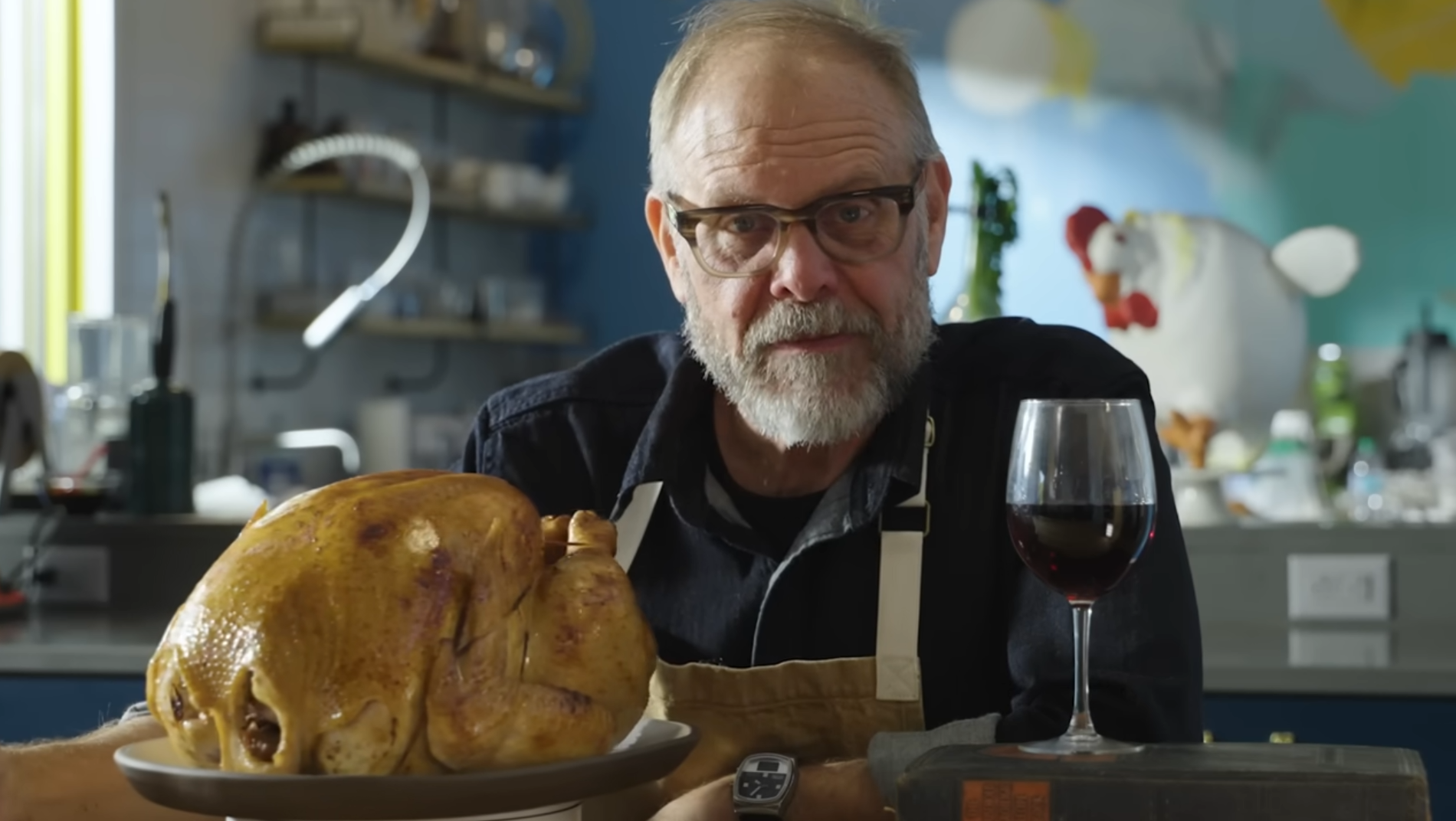
Google E-E-A-T, that is.
As a trained interdisciplinarian, I’m always looking for connections between disparate concepts. You can thank Dr. Bruce for that.
I’ve been a writer since I was young—I’ve got hand drawn picture books to prove it. I haven’t always been a marketer and SEO, though I’m not a long way off from saying I’ve been doing this for about ten years. Impending midlife crisis aside, I can fairly confidently say I enjoy what I do. Especially when I get to make connections between my personal interests and work.
I’ve been an Alton Brown fan for probably twenty five years (oh my god, I’m old…), ever since the Food Network days. Needless to say that I was thrilled when he started a new YouTube series in the fall of 2025. The show is the perfect late night watch for winding down at the end of a long day.
And it happens to be a great example of good E-E-A-Ts.
Who is Alton Brown?
Alton Brown is an award-winning culinary genius, TV personality, producer, author, and… the list goes on. You might know him from Iron Chef America, Cutthroat Kitchen, and, of course, Good Eats, which originally ran for fourteen seasons and 250 episodes on Food Network and sister network, the Cooking Channel.
Like me, Alton Brown is a bit of an interdisciplinarian. He broke into the TV industry in the 80s when he worked as a cinematographer for music videos—including R.E.M.’s “The One I Love.” How cool is that on a CV?
In the 90s, however, Brown enrolled in the New England Culinary Institute because he was dissatisfied with the quality of cooking shows on TV. He graduated in 1997 and began filming Good Eats in the summer of the following year.
Good Eats was hugely successful, becoming the fifth longest-running show on Food Network.
The show also earned Brown both a Peabody and a James Beard Award. And it was my absolute favorite show when I was a kid.
In November 2025, Brown started a new, Good Eats-style series on YouTube titled Alton Brown Cooks Food. This new series has the spirit and backbone of Good Eats without the network oversight. You can tell it’s really fun to make, as it’s certainly fun to watch. Across the (currently) 37-episode series, the view counts range from 500k to 2.4 million views.
Viewers are absolutely eating the series up, pun intended, because it’s Alton Brown doing what he does best: teaching us how to cook.
What’s Google E-E-A-T?
To put it simply, the E-E-A-T guideline is a framework for making good content.
From Google’s own fundamentals guide:
“Google's automated systems are designed to use many different factors to rank great content. After identifying relevant content, our systems aim to prioritize those that seem most helpful. To do this, they identify a mix of factors that can help determine which content demonstrates aspects of experience, expertise, authoritativeness, and trustworthiness, or what we call E-E-A-T.”
Broken down a bit further:
Experience: Does the writer have personal, first-hand experience on the topic?
Expertise: Does the writer have any training or credentials on the topic?
Authoritativeness: Is the writer and/or website recognized by peers and other sources?
Trustworthiness: Is the content accurate and honest, and is the website secure?
It’s not like technical SEO, where a few keyword changes or a new schema markup can make a difference. E-E-A-T takes everything into context—who you are, what you do, and how well you understand what you’re writing about.
How Alton Brown Creates E-E-A-T Content
One of the best examples of Alton Brown making good E-E-A-T content is episode one of his YouTube Series: The Big Bird. In fifteen minutes, Brown shows us his entire process, from thawing and brining the frozen turkey and preparing a gravy, to the first carve into a perfectly golden breast.
With 2.4 million views (as of August 2026, only a 9 month old video btw!), I’d say this is a great piece of content to learn from. Let’s dig in.
Experience
In The Big Bird, Alton begins the video by recalling his work on Good Eats, referencing the iconic hour-long Thanksgiving special that premiered in 1999: Romancing the Bird. He mentions that, over the decades since the episode’s release, viewers have overwhelmingly agreed his turkey-cooking method was one of the best they’d ever tried.
At the same time, he says, he’s tried various different Thanksgiving turkey cooking methods, experimenting and learning along the way. Brown then gives a cheeky, excited look at the camera and declares he’s going to revisit the recipe, more than twenty years later.
What makes this a good example of Experience is that Brown isn't approaching the turkey as an outside observer. He's drawing on decades of actually developing, testing, teaching, and revisiting his own cooking methods. We're seeing firsthand knowledge in action—not simply information he's gathered from somewhere else.
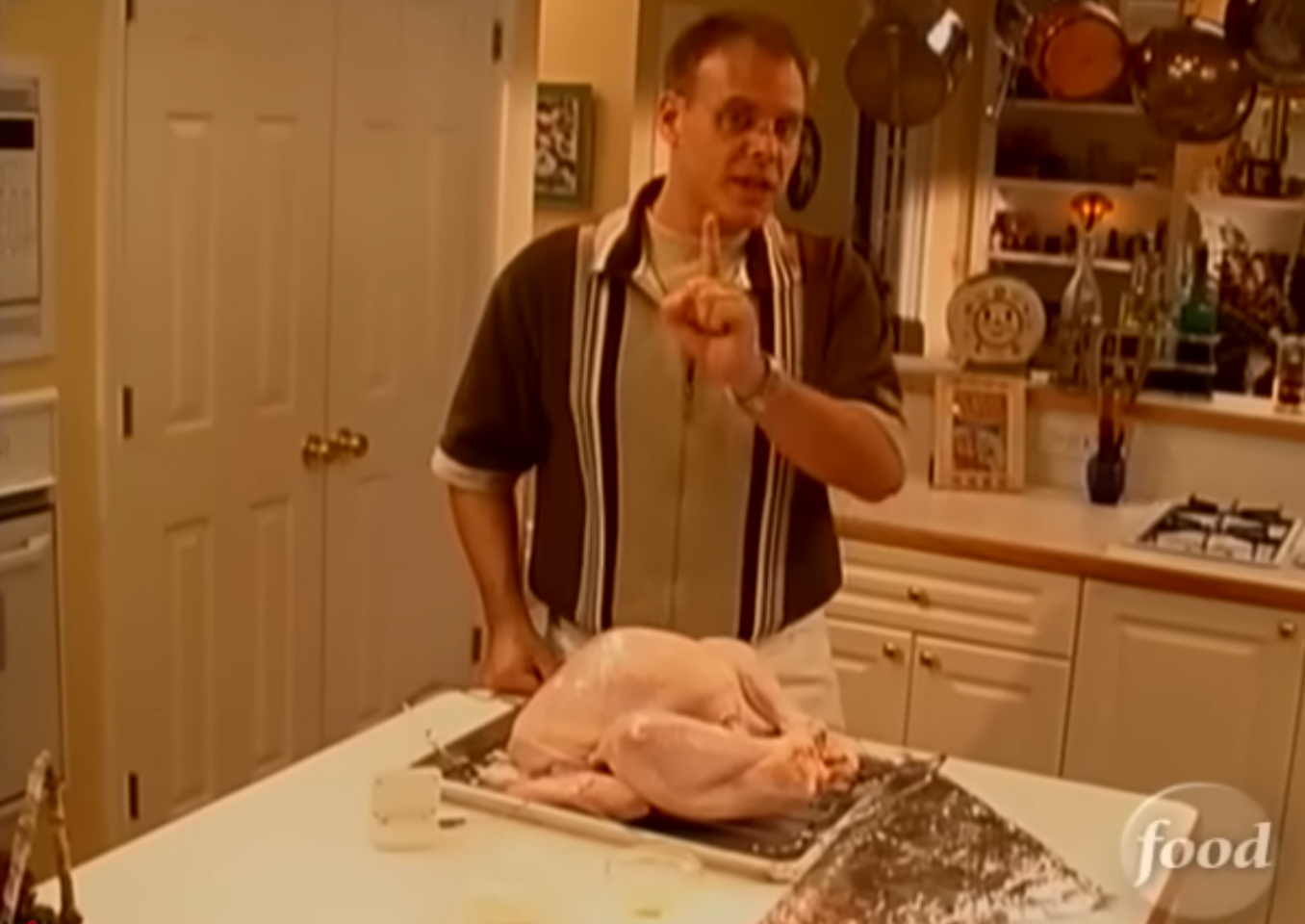
A screenshot from the original 1999 Good Eats episode. Aww, he’s so young.
Expertise
Experience tells us that Alton Brown has been cooking for decades. Expertise is what he does with all of that knowledge.
One of the things I’ve always loved about Brown’s cooking shows is that he rarely stops at telling you what to do. He explains why you’re doing it. In The Big Bird, for example, he doesn’t simply tell us to thaw the turkey before cooking it. He explains why frozen birds are common in the U.S., how freezing can help prevent contamination during shipping and storage, and why thawing the bird presents its own set of challenges.
That kind of explanation is what makes expertise visible. Brown isn’t asking viewers to blindly follow a recipe because he says so; he’s giving them enough context to understand the decisions behind the recipe.
And that knowledge goes beyond culinary technique. Brown’s background in food science, television production, and storytelling has always been part of what makes Good Eats and his newer work distinctive. He approaches cooking as a system of interconnected problems—ingredients, chemistry, equipment, technique, and even the way information is communicated to the person actually doing the cooking.
In The Big Bird, we see the benefit of that approach. Brown isn't just showing us how to cook a turkey. He's teaching us how to think about cooking one.
Authoritativeness
When it comes to authoritativeness, Alton Brown has something that’s difficult to manufacture: a decades-long reputation as a trusted voice in food and cooking. Good Eats wasn’t just a successful cooking show—it became an influential piece of food television, earning both a Peabody Award and a James Beard Award. Brown went on to host and appear on programs like Iron Chef America and Cutthroat Kitchen, further establishing himself as a recognizable authority in the culinary world.
But there’s an important distinction here. Brown isn’t authoritative simply because he’s famous or has appeared on television for decades. His authority comes from the recognition he’s earned from other people and institutions in his field. There’s a reason viewers are willing to spend fifteen minutes watching him explain how to cook a turkey: he has built a reputation over decades of creating, teaching, and talking about food.
And The Big Bird benefits from that reputation. Brown doesn't have to spend the first five minutes convincing us that he knows how to cook a turkey. His previous work establishes that context before the video even begins.
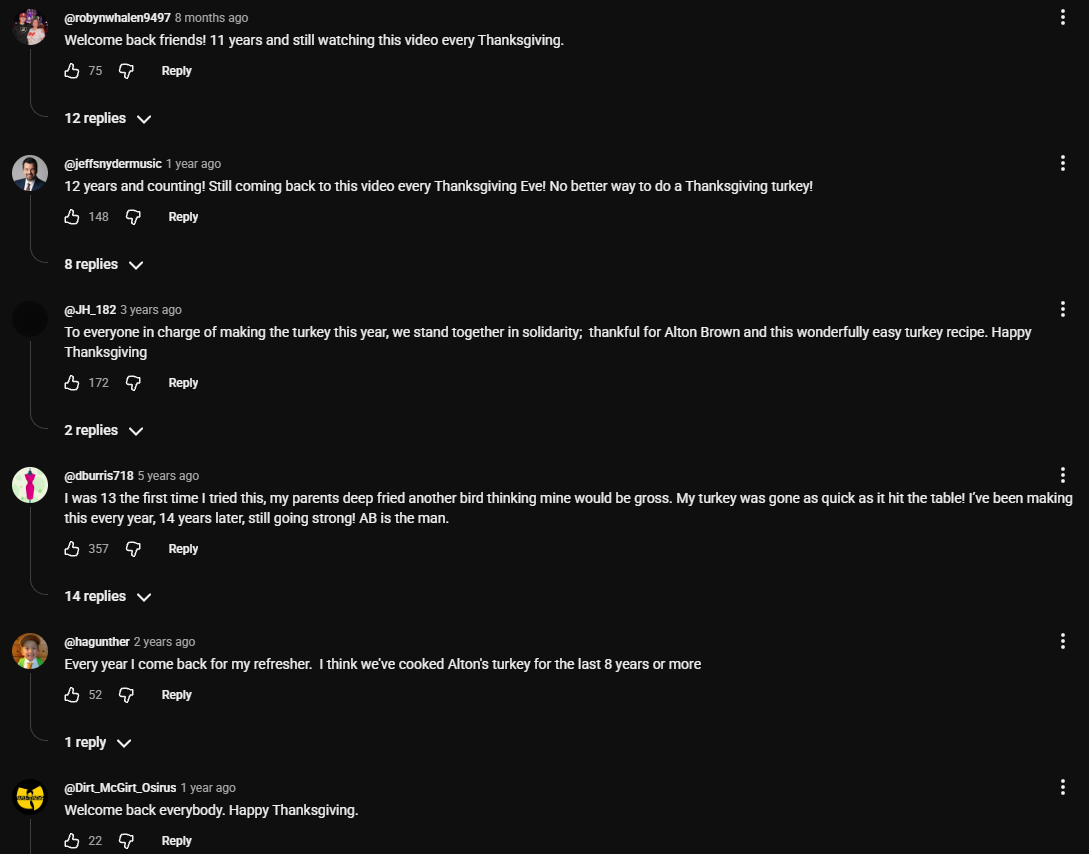
If you need proof of that, just read the comments on the original roast turkey episode.
Trustworthiness
What signals trustworthiness in Brown’s video, in my opinion, is the fact that he’s revisiting a recipe from 1999—one that still receives acclaim and recognition today—with improvements, thanks to insights viewers have shared over the years.
He could have left well enough alone, considering people still use and love his original recipe. Instead, he acknowledges that his understanding has changed over the past two decades and takes another look at what he got right, what he might do differently, and what he’s learned since then.
That willingness to revisit his own work is important. Brown isn't presenting his current method as the one true way to cook a turkey simply because he's Alton Brown. He's showing us how his thinking has evolved and, throughout the process, explaining the reasoning behind his decisions.
That's what makes the video feel trustworthy to me. He's not just asking viewers to take his word for it. He's showing his work, sharing what he's learned, and being transparent about the fact that even an expert can learn something new.
And that's an important distinction for E-E-A-T: expertise can establish that someone knows what they're talking about, but trustworthiness gives us a reason to believe that they're being honest and responsible with that knowledge.
What Can Marketers Learn From Alton Brown?
I started this article by calling myself an interdisciplinarian, so naturally I’m going to try to connect Alton Brown’s turkey to SEO.
The thing that makes The Big Bird such a good example of E-E-A-T isn’t any one credential, award, or claim. It’s the combination of everything Brown brings to the table.
He has Experience because he’s actually spent decades cooking, experimenting, and developing recipes. He demonstrates Expertise by explaining the reasoning behind his techniques rather than simply telling us what to do. He has Authoritativeness because his work has been recognized by respected institutions and he’s established a decades-long reputation in the culinary world. And he demonstrates Trustworthiness by being transparent about how his thinking has changed and showing us the process behind his recommendations.
None of those things can be reduced to a handful of keywords or an "E-E-A-T score."
And that's really the point.
Good E-E-A-T content doesn't say "I'm an expert." It gives the reader reasons to believe it.
For content marketers, that means we should spend less time thinking about how to make content look authoritative and more time thinking about how to demonstrate genuine experience, expertise, authority, and trust. Who is writing this? What do they actually know? What have they done? Why should someone believe them? And are we giving the reader enough information to answer those questions for themselves?
Alton Brown doesn't have to tell us he's an expert on turkey. He just cooks the damn turkey, explains why he's doing what he's doing, tells us what he's learned, and lets us watch.
Honestly, that's pretty good content marketing advice.
And now, if you'll excuse me, I’m going to eat a turkey sandwich. I’m really hungry for some reason…
You might also like:
When Brand Loyalty Backfires: How Liquid Death Fumbled a Formula Change
Internal Linking: The Most Underrated SEO Growth Lever
What Happened to Customer Service? An Insider’s View of a Broken System
